


The PEI Dental College has established the Advanced Facial Therapies and Adjunctive Considerations Standard (approved February 18, 2026). Any registrant who plans to administer neuromodulators (for example, Botulinum Toxin Type A) and adjunctive therapies must hold a valid Neuromodulator Dentist Permit issued by the PEIDC. The permit is renewed every year during the registration renewal period.
A dentist must hold the PEIDC certificate for a level before treating patients at that level, regardless of any certificate from a course provider.
Providing this care without a PEIDC certificate is considered professional misconduct.
The three-level Botox certification pathway
- Level 1: Applied Anatomy Review & Introduction to Neuromodulators A mandatory review of head and neck anatomy, the pharmacology of neuromodulators, and related esthetic and non-esthetic therapies. It does not authorize any patient treatment. No permit is required.
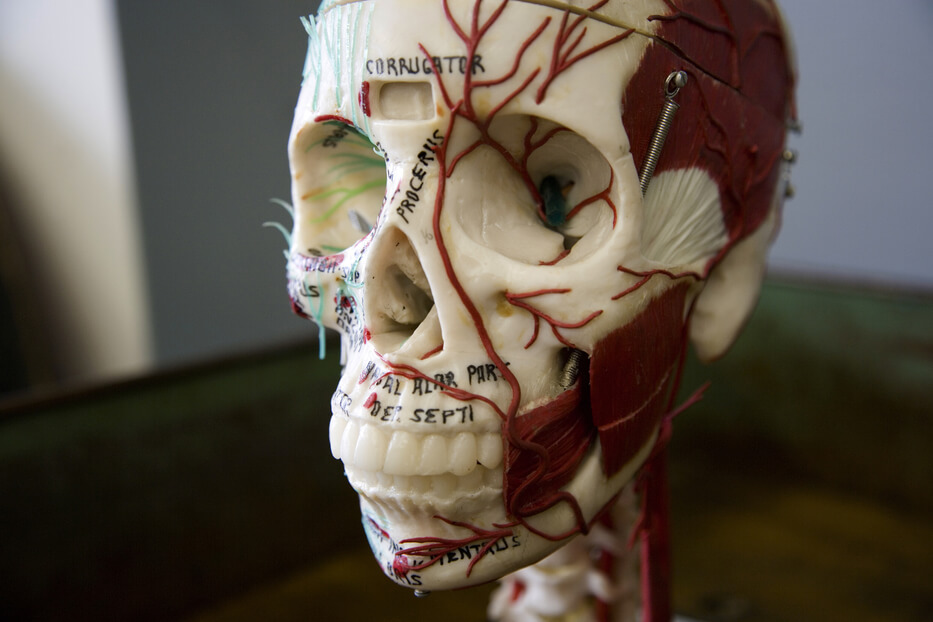
- Level 2: Basic Neuromodulators: Upper Face & Bruxism Authorizes neuromodulators in the superficial muscles of the upper face, and bruxism treatment, for the dentist’s own patients or patients referred for evaluation. Upper face is limited to the frontalis, glabellar complex, procerus, corrugator supercilii and orbicularis oculi. Bruxism treatment is limited to the temporalis and masseter. Permit application fee: $200.
- Level 3: Advanced Neuromodulators: Mid-Face, Lower Face & Neck Adds the mid face, lower face and neck to the Level 2 muscles. The Standard lists the levator labii superioris alaeque nasi, levator labii superioris, nasalis, zygomaticus major and minor, risorius, levator and depressor anguli oris, buccinator, orbicularis oris, depressor labii, mentalis, platysma, sternocleidomastoid, trapezius, frontalis-occipitalis and digastrics. Permit application fee: $400.
The levels are gated. A dentist cannot move to the next level without completing the previous one. The Standard also advises that bruxism and myofascial pain are complex diagnoses that may need more than neuromodulators, and that any new or emerging therapy not described in the Standard must be discussed with the PEIDC before it is offered. Oral and Maxillofacial Surgeons may provide any procedure in the Standard that their training covers.
The 20-case requirement and record review
Before moving from Level 2 to Level 3, a dentist must have at least 20 documented treatments on different patients, completed over a minimum of one year at Level 2. This shows substantial experience within the level.
Records for every patient treated must be available at all times in case the PEIDC asks to review them.
View the PEI Botox and guidelines
View the guidelines below or click here to view them on the PEIDC’s website.
Advanced Facial Therapies and Adjunctive Considerations Standard
View the Standard of Practice.
Delegation to team members
A dentist cannot assign the administration of neuromodulators or related therapies to any staff member unless that person is registered and authorized for this restricted activity by a professional regulatory authority in Prince Edward Island.
Where treatment can take place
These procedures are an extension of regular dental care. They must be provided in a recognized and approved dental facility, on patients of record. The Standard does not allow treatment in stand-alone or mobile spas, esthetic studios, hair salons, fairs or expositions, or private residences.
Key requirements
- A documented workup that includes history, clinical examination, photographs and records, with a current dental and medical health history from the patient
- Treatment is part of a comprehensive dentofacial or maxillofacial treatment plan
- Informed consent is documented, covering benefits, risks, post-operative care, complications, alternatives and estimated costs
- The patient’s psychological health, motivation, goals and expected outcomes are assessed and documented
- For bruxism, a complete examination is done and treatment of primary dental disease is ongoing or complete
- Pre-treatment photographs are mandatory for cosmetic facial therapy
- Specific injection sites and site-specific doses are recorded
- Product brand, lot number and expiry date are recorded for every case
- Patients are told when a use is off-label, with risks discussed and documented
- Follow-up, continuity of care outside office hours and emergency care are the dentist’s responsibility, with referral when a case exceeds your training
- Advertising follows the PEIDC guidelines for facial esthetic treatments
- At least 10 hours of continuing dental education in facial esthetics and adjunctive procedures in each 3-year continuing education cycle to maintain certification
- Bruxism and TMD treatment: Initial conservative, non-invasive, reversible and evidence-based approaches should be exhausted before proceeding with neuromuscular blocking agents.
- Dermal fillers: General dentists are not authorized to administer dermal fillers under the PEIDC’s neuromodulator permit framework.
- Advertising: The PEIDC permit application states that advertising neuromodulator services is not compliant with its Advertising Standard, although communicating these services internally within a dental practice is permitted. Dentists should confirm current advertising requirements directly with the College.
Document your cases with Facetec Software
PEI’s Standard puts documentation at the center of every treatment, and Level 3 depends on 20 well-documented cases. PTIFAT recommends Facetec as the preferred tool for clinical photography and patient documentation. Facetec is cloud-based software built for dentists and physicians who offer Botox® and other facial treatments.
Here is how Facetec supports what the PEIDC expects:
- Pre-treatment photographs. Standardized clinical photography with up to 29 facial views, in-app capture guides to keep angles consistent, and unlimited cloud storage.
- Injection sites and doses. Customizable injection charting records injection sites and dosages for each patient, which supports the Standard’s site-specific dose records.
- Informed consent. Patient consent forms are kept with the patient record.
- Records available for review. Treatment history, photos and charting stay together in one patient record, so your documentation is organized if the PEIDC asks to see it.
- Your Level 3 case count. Keeping every Level 2 case in one place makes it easier to show 20 documented treatments on different patients over at least one year.
Facetec also includes scheduling, billing and before-and-after galleries, so the same record can run your Botox® service day to day. Facetec is a documentation tool and does not replace the PEIDC’s requirements. Confirm that your records meet the Standard, including product brand, lot number and expiry date for every case.
Learn more about FacetecPTIFAT is a Council-approved education provider
The PEIDC will only recognize training from programs on its approved list, and dentists who have not completed an approved course are not authorized to provide these services in PEI. The Council has approved the Pacific Training Institute for Facial Aesthetics and Therapeutics.
It is the dentist’s responsibility to confirm with the PEIDC that a program is approved before enrolling.
View our approved training pathwayReady to meet Prince Edward Island’s requirements?
PTIFAT’s Level 1 and Level 2 programs cover anatomy, injection technique, documentation protocols and practice integration, so you can apply for your permit with confidence. Level 3 follows once you have completed your 20 documented cases.
Speak to an educational advisor

 ® Refresher Course
